
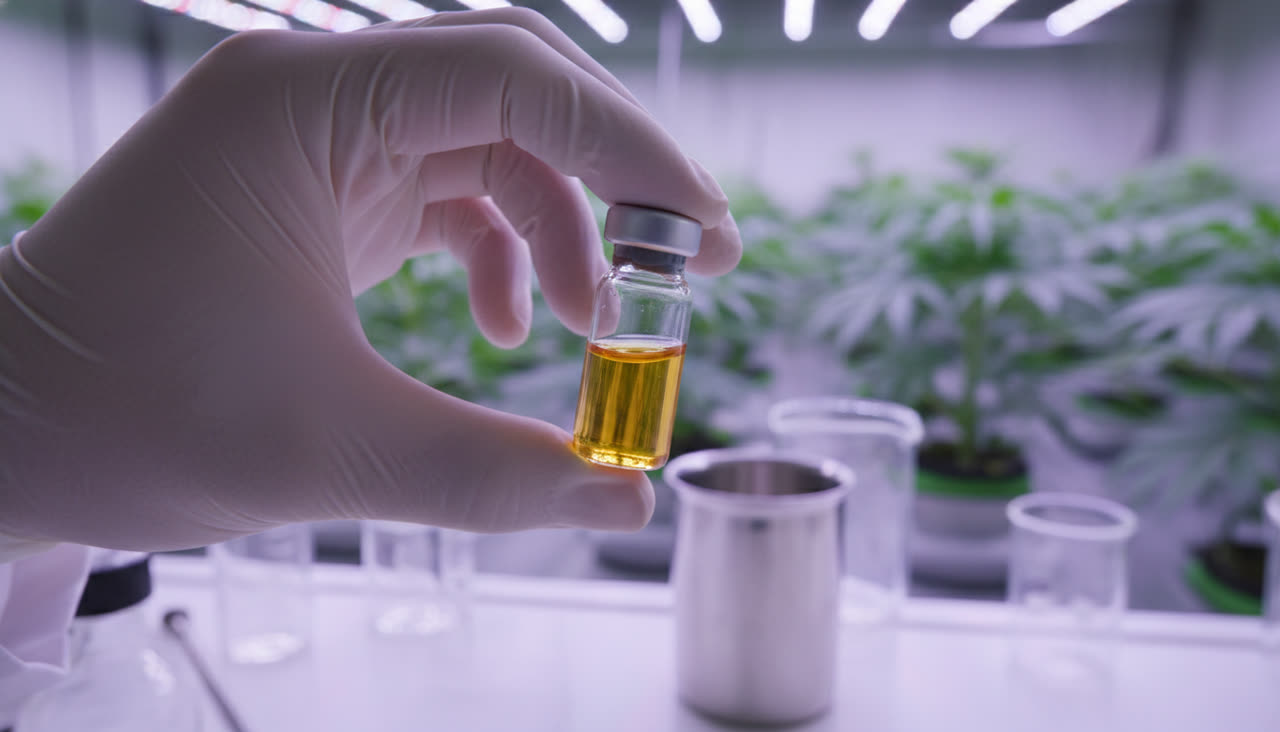
While the headlines chase dispensary openings and legalization votes, one of the fastest-growing corners of the entire cannabis economy is happening quietly, in laboratories and clinical trials. A newly published industry report projects that the global market for cannabis pharmaceuticals will grow from roughly $4.7 billion in 2025 to $111.1 billion by 2032 — a compound annual growth rate of about 57%. Put plainly: this is one of the steepest growth curves in any industry, anywhere.
I've spent two decades watching cannabis fight for legitimacy, and nothing confers legitimacy like Big Pharma writing checks. The fact that established drugmakers are now competing alongside pure-play cannabis companies in this space tells you cannabinoid medicine has crossed a threshold from fringe to frontier.
Why the timing is not a coincidence
This forecast didn't appear in a vacuum. It lands precisely as the federal government is, for the first time in decades, actively expanding cannabis research. The December 2025 executive order that set rescheduling in motion specifically prioritized medical marijuana and CBD research, and the subsequent move of FDA-approved and state-licensed medical products to Schedule III lowers barriers that have hamstrung scientists for fifty years.
That matters more than most people realize. For decades, studying cannabis meant navigating a Schedule I bureaucracy so onerous that serious research was nearly impossible — you couldn't easily source study-grade material, secure registrations, or get protocols approved. The plant was effectively quarantined from the scientific method. Loosening those constraints is like removing a dam. The research that's been dammed up for a generation can finally flow.
You can't build a pharmaceutical industry on a substance scientists aren't allowed to study. Rescheduling changes that overnight.
The structural shift underneath the number
A 57% growth rate sounds like hype until you understand what's driving it. Three things are converging at once. First, regulatory access — easier research pathways and clearer registrations for cultivators, manufacturers, and testing labs. Second, capital — a friendlier federal posture and 280E relief make the economics of cannabinoid drug development far more attractive. Third, legitimacy — every successful trial and every major pharmaceutical entrant pulls more institutional money and talent into the field.
The report names a roster of players spanning both dedicated cannabis companies and traditional pharmaceutical giants. That mix is the tell. When companies that have spent a century in conventional medicine start competing for cannabinoid intellectual property, the category has graduated. We're watching the early innings of cannabis being treated not as a consumer indulgence but as a pharmacological platform with applications in pain, neurology, oncology support, and beyond.
What the dispensary world should take from this
Here's where seasoned perspective helps separate the consumer market from the medical one, because they are increasingly distinct. The cannabis you buy at a New York dispensary is a state-regulated consumer product — tested, tracked, but not an FDA-approved medicine. Cannabis pharmaceuticals are something else: standardized, clinically studied, condition-specific formulations developed through the drug-development pipeline.
These two worlds will keep diverging, and that's healthy. A maturing pharmaceutical segment validates the plant's therapeutic potential, which lifts the credibility of the whole category — including the consumer side. Over time, a more scientific understanding of cannabinoids could even shape what dispensary shelves look like, as consumers gravitate toward products backed by real evidence rather than marketing.
For now, the consumer market remains its own competitive arena, driven by price, selection, and brand. If you're shopping that market, the practical tools haven't changed: compare the day's cannabis deals, get to know the brands you trust, and check licensed dispensaries near you before you buy. The medical breakthroughs may grab the headlines, but the everyday decisions still come down to value and quality.
The bigger lesson
The recreational market gets the attention because it's visible — storefronts, deals, culture. But the pharmaceutical side may ultimately be the bigger business, and it's growing on a foundation that recreational cannabis never had: rigorous science and the capital that follows it. A projected jump from under $5 billion to over $111 billion in seven years is the kind of number that, if even half right, reshapes how the world thinks about this plant.
What it means for patients and the medical market
Strip away the eye-popping forecast and the human story underneath is about patients. A real cannabis pharmaceutical industry means standardized, clinically validated products developed for specific conditions — dosed precisely, manufactured consistently, and backed by the kind of evidence doctors can actually prescribe against. That's a different proposition than asking a patient to self-titrate with a dispensary product and hope for the best. It opens the door, eventually, to physician guidance and even insurance pathways that the consumer market simply can't offer.
It also forces a healthy clarification I've wanted for years: the difference between cannabis as a consumer product and cannabinoids as medicine. Blurring those two has hurt both — it's let bad actors make medical claims about recreational products while making serious researchers wary of the whole field. A distinct, rigorously studied pharmaceutical track lets each side be what it is. I'd caution against the hype, though. A 57% growth rate assumes a lot of trials succeed and a lot of capital stays patient, and drug development is famously unforgiving. The number is a signal of direction, not a promise of destination, and anyone who watched the first wave of cannabis "blockbuster" predictions knows how often the timeline slips. For everyday consumers, the dispensary market remains the relevant one, and comparing deals and brands across licensed dispensaries is still how you shop it well.
I've learned to be skeptical of hockey-stick forecasts. But the forces behind this one — rescheduling, research access, and serious pharmaceutical capital — are real and reinforcing. The lab, not the dispensary, may turn out to be where cannabis finally wins its most important argument.