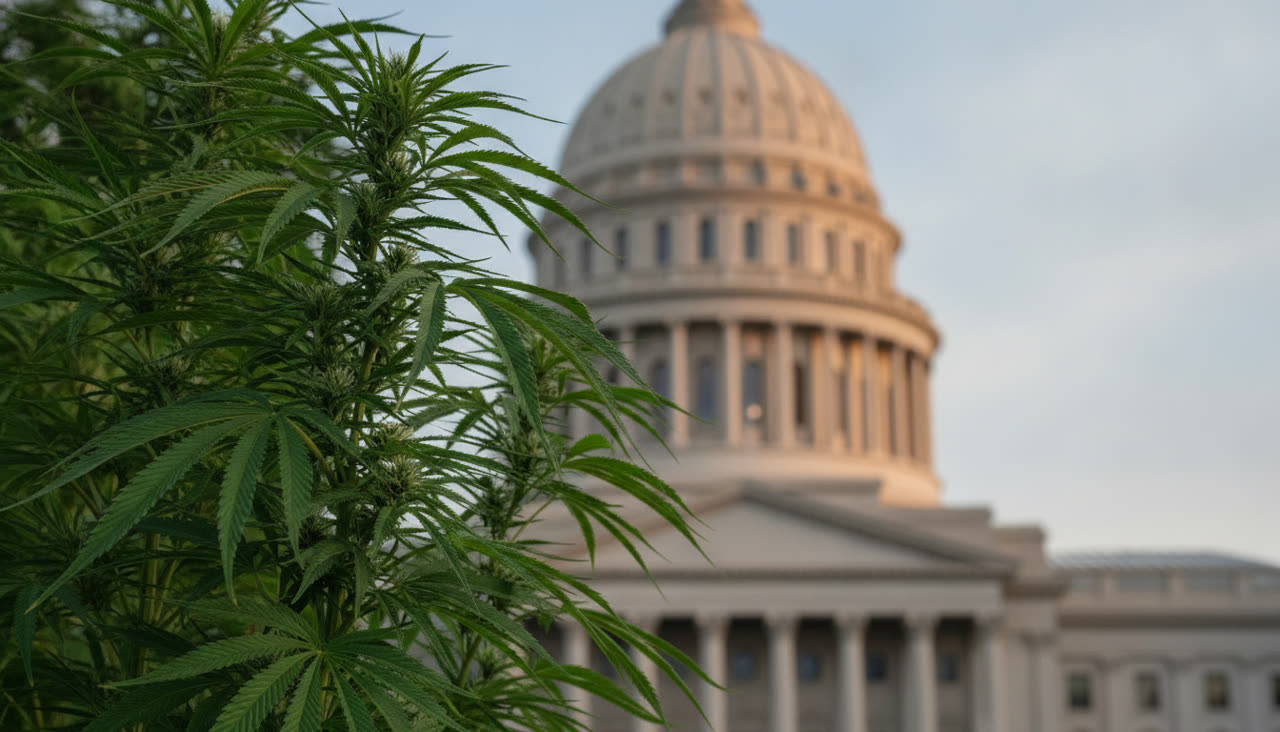
Every few years the Farm Bill — a sprawling piece of agricultural legislation — quietly becomes one of the most important documents in cannabis. The 2018 version accidentally birthed a multibillion-dollar intoxicating-hemp industry. The 2026 version may decide its fate, and a new amendment called the Lawful Hemp Protection Act (LHPA) is at the center of the fight.
The loophole that started it all
The 2018 Farm Bill legalized hemp by defining it as cannabis containing no more than 0.3% delta-9 THC by dry weight. That single, narrow metric opened the door to everything that followed: delta-8, delta-10, THCA flower, and a galaxy of novel cannabinoids that can intoxicate users while technically qualifying as 'hemp.' The result is a hemp-derived consumer products market now estimated to exceed $30 billion — much of it sold outside the testing and age limits that govern licensed marijuana.
What the LHPA would do
Introduced as an amendment to the House version of the 2026 Farm Bill, the Lawful Hemp Protection Act proposes two consequential changes: it would modify the federal definition of 'hemp,' and it would create a framework for regulating the hemp-derived consumer products marketplace. In plain terms, it's an attempt to stop treating intoxicating products as ordinary agricultural commodities and start governing them like what they are.
It enters a crowded field. Multiple competing proposals — some that would ban intoxicating hemp outright, others that would regulate it — are jockeying for position in the Farm Bill debate. The LHPA stakes out the middle: regulate rather than prohibit, but on federal terms.
Why the stakes are so high
The outcome matters for three groups. For the hemp industry, it determines whether a $30 billion market gets a durable legal foundation or a patchwork of state bans (see Tennessee's July 1 THCA ban). For licensed cannabis operators, it shapes whether they keep competing against cheaper, less-regulated hemp THC. And for consumers, it decides whether the gummies and vapes on convenience-store shelves finally come with the testing, labeling, and age controls that licensed dispensaries already require.
That last point is the one most New Yorkers will feel. In a regulated market, the products at a licensed dispensary are lab-tested and tracked; the intoxicating-hemp market grew by avoiding exactly that. A federal framework could narrow the gap — or, if prohibitionist proposals win, push intoxicating hemp out entirely.
What to watch
Farm Bills are notoriously slow and heavily negotiated, so expect months of maneuvering. The key questions: Does the final bill redefine hemp to capture total THC rather than just delta-9? Does it regulate or ban intoxicating products? And does it set federal standards that override the growing thicket of conflicting state laws? Each answer reshapes the competitive landscape for everyone selling cannabinoids in America.
The bottom line
The Lawful Hemp Protection Act is the latest move in a years-long effort to fix a loophole that built an industry. Whether it becomes law, gets replaced by a stricter alternative, or dies in negotiation, the 2026 Farm Bill is shaping up as the moment Washington finally decides what 'hemp' means — and what happens to the $30 billion built on the old definition. For adults 21+. Not legal advice.