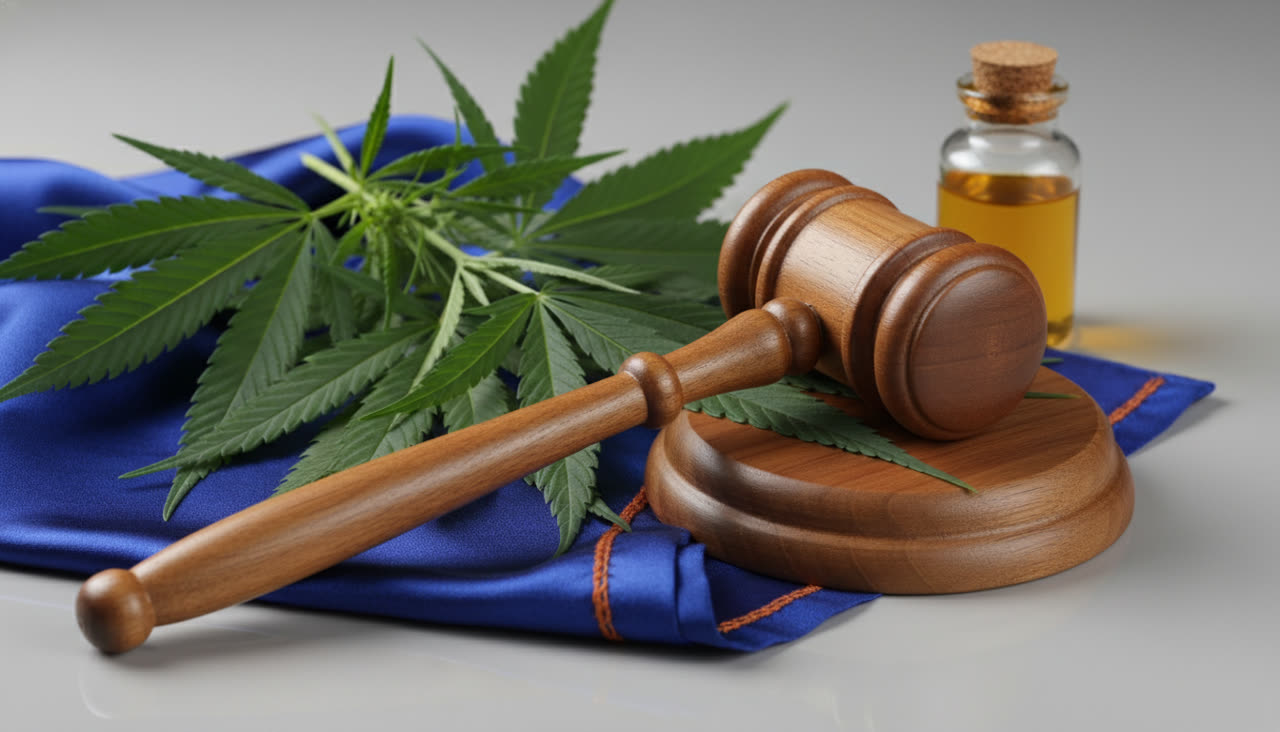
For years, the fastest-growing corner of the cannabis economy wasn't licensed marijuana at all — it was intoxicating hemp. Now the reckoning has arrived, and Tennessee is the clearest example yet. Starting July 1, 2026, the state bans the sale of THCA and other intoxicating hemp-derived products, a move that captures just how much money — and how much regulatory confusion — has been riding on a single loophole.
How we got here
When the 2018 Farm Bill legalized hemp federally, it defined the crop by its low delta-9 THC content. What it didn't anticipate was an industry ingenious enough to sell high-THCA flower — chemically almost identical to marijuana once you light it — under the banner of 'hemp.' Add delta-8, delta-10, and a parade of novel cannabinoids, and an enormous market sprang up in gas stations and smoke shops, largely outside the testing and age-gating that govern licensed dispensaries.
What Tennessee is doing
Tennessee's Alcoholic Beverage Commission took full regulatory authority over hemp in January 2026 and finalized rules that end intoxicating-hemp sales on July 1. The stakes are blunt: industry estimates suggest roughly 75% of the state's hemp sales came from THCA products, and Tennessee's own tax-revenue forecast for the sector collapsed from about $55 million to under $10 million a year. That's a measure of how thoroughly intoxicating products had come to define a market sold as non-intoxicating 'hemp.'
Why it matters far beyond Tennessee
Tennessee isn't alone. A wave of states is moving to restrict or ban intoxicating hemp, and Congress is wrestling with the same question in the 2026 Farm Bill debate. With the hemp-derived THC market estimated above $30 billion nationally, every state ban redraws the map of where these products can legally be sold — and pushes consumers toward one of two poles: the unregulated gray market, or licensed, tested cannabis.
That second pole is the real story for legal-state consumers. In a market like New York's, the contrast is stark: licensed dispensaries sell lab-tested, clearly labeled products tracked under state rules, while the intoxicating-hemp boom thrived precisely because it avoided those guardrails. As more states slam that door, the case for buying from a licensed dispensary only gets stronger.
What happens next
Expect three things. First, more state bans through 2026 as legislatures copy Tennessee's playbook. Second, a federal fight over whether the next Farm Bill closes the hemp loophole nationally or carves out a regulated lane for low-dose products. And third, migration — some intoxicating-hemp demand will move into licensed cannabis where it exists, and some will simply go underground where it doesn't.
For consumers, the takeaway is simple: the 'hemp' product on a convenience-store shelf is living on borrowed time in a growing number of states, and it never came with the testing a licensed shop provides. Compare current deals at licensed New York dispensaries and you'll see what a regulated market actually looks like.
The bottom line
Tennessee's July 1 ban is a snapshot of a national shift: the intoxicating-hemp era that exploded under the 2018 Farm Bill is colliding with state regulators determined to rein it in. Whether the result is more licensed cannabis or more gray market depends on each state — but the loophole that built a $30 billion industry is closing, one deadline at a time. For adults 21+.