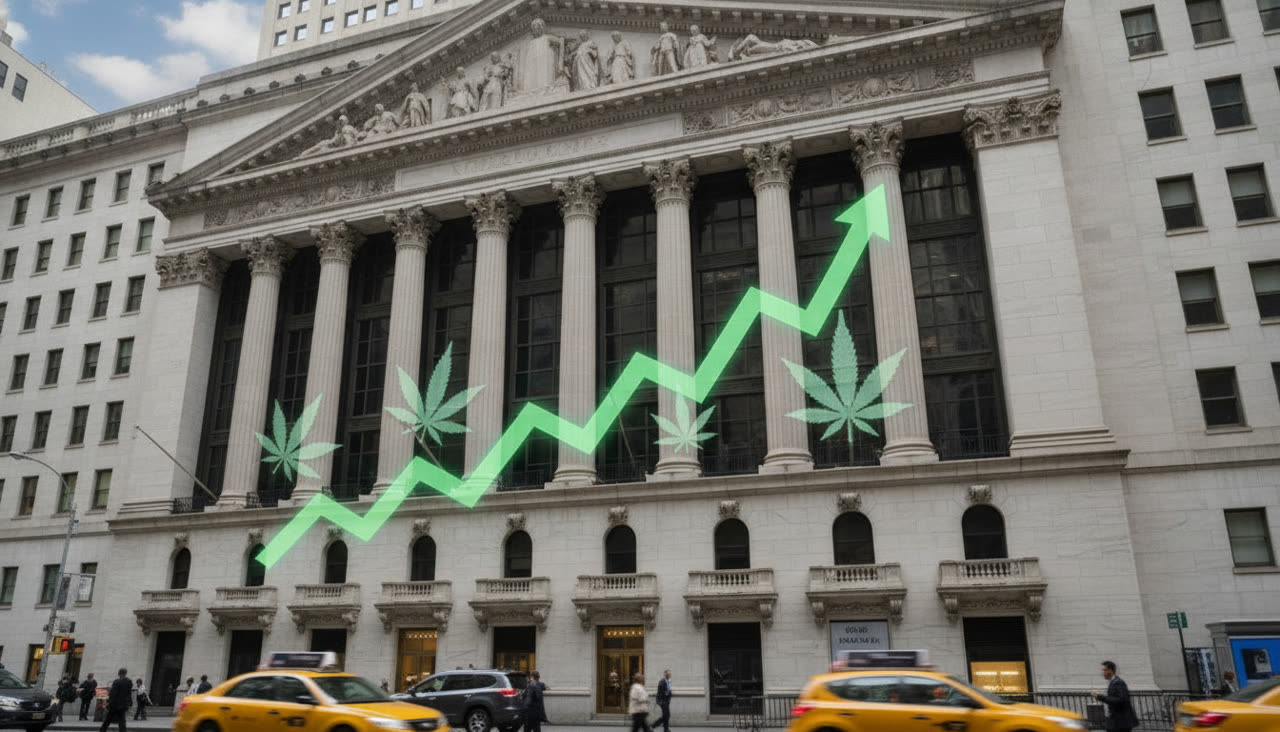
Every so often the cannabis industry crosses a line that can't be uncrossed, and this is one of them. Trulieve Cannabis is now trading on the New York Stock Exchange under the ticker TRLV — making it the first U.S.-based, plant-touching cannabis company to list on a major U.S. stock exchange. For an industry that has spent its entire existence locked out of Wall Street's front door, that is a genuinely historic moment, and it traces directly back to federal rescheduling.
Why this was impossible until now
To appreciate the milestone, you have to understand the wall it just breached. Because marijuana has been federally illegal, the big American exchanges — the NYSE and Nasdaq — would not list companies that actually grow and sell the plant. U.S. cannabis operators were instead pushed onto over-the-counter (OTC) markets and Canadian exchanges, venues with far smaller, less liquid investor pools and a fraction of the institutional attention. It meant the largest, most successful American cannabis businesses traded like penny stocks in the shadows, no matter how strong their fundamentals.
That exile is exactly what makes Trulieve's NYSE debut matter. A major-exchange listing isn't just prestige; it's access — to deeper capital, to institutional investors and index funds that can't touch OTC names, and to the liquidity that lets a company raise money efficiently.
Rescheduling opened the door
This didn't happen in a vacuum. The breakthrough was made possible by the federal government's move to reschedule medical cannabis to Schedule III, the same shift we covered when medical cannabis was reclassified ahead of the June DEA hearing. That reclassification changed the legal and financial calculus that had kept the major exchanges away, and Trulieve's uplisting is one of the first concrete, real-world consequences of it. We've written about how rescheduling could ripple into banking reform and tax relief; this is the capital-markets version of the same story, and arguably the most visible yet.
It's worth keeping the precision our readers expect: the rescheduling action so far centers on the medical side, and the broader fight over all marijuana is still working through the courts and the DEA's process. But the direction is unmistakable, and the financial world is already responding.
Who Trulieve is
This isn't a fragile startup planting a flag. Trulieve is one of the largest multistate operators in the country, with more than 200 locations and a famously dominant position in Florida, where it recently opened its 170th dispensary. The financials back up the scale: roughly $1.2 billion in trailing-twelve-month revenue, an operating profit around $149 million, and meaningful free cash flow — numbers that would look respectable in any industry, let alone one that's been starved of normal capital access. In other words, the company breaking this barrier is a heavyweight, which is part of why the listing carries weight.
What it means for the rest of the industry
Firsts set precedents. If a U.S. operator can trade successfully on the NYSE, others will want to follow, and the path is now visibly walkable. Over time, major-exchange access can pull institutional capital into a sector that has been starved of it, add liquidity that makes shares easier to buy and sell, enable index inclusion, and lower the cost of capital for operators trying to expand. Those are the unglamorous financial plumbing upgrades that let an industry actually mature — the same theme we explored in the first real profits coming into view and cannabis stocks reaching mainstream brokerages like Robinhood.
For New York specifically, none of this changes what happens at the dispensary counter tomorrow. But a better-capitalized national industry is the backdrop against which New York's operators compete and raise money, and a healthier capital environment tends to support more investment, more competition, and ultimately more choice for consumers.
A dose of perspective
Let me temper the champagne, because this is still cannabis and nothing here is risk-free. A listing is a gateway, not a guarantee — the underlying business of running dispensaries in a high-tax, heavily regulated, federally-gray industry is as hard as ever, and cannabis equities remain volatile and speculative. None of this is investment advice, and the sector's history is littered with milestones that didn't translate into smooth gains. The broader rescheduling outcome is also still unsettled, and a reversal or delay would cool the enthusiasm quickly.
But symbolism matters in markets, and access matters more. For the first time, an American cannabis company is trading where the rest of corporate America trades. That barrier is down, and barriers like this rarely go back up. Whatever happens to any single stock, the door Trulieve just walked through is now open for the industry behind it. For adults 21+. Not investment advice.