
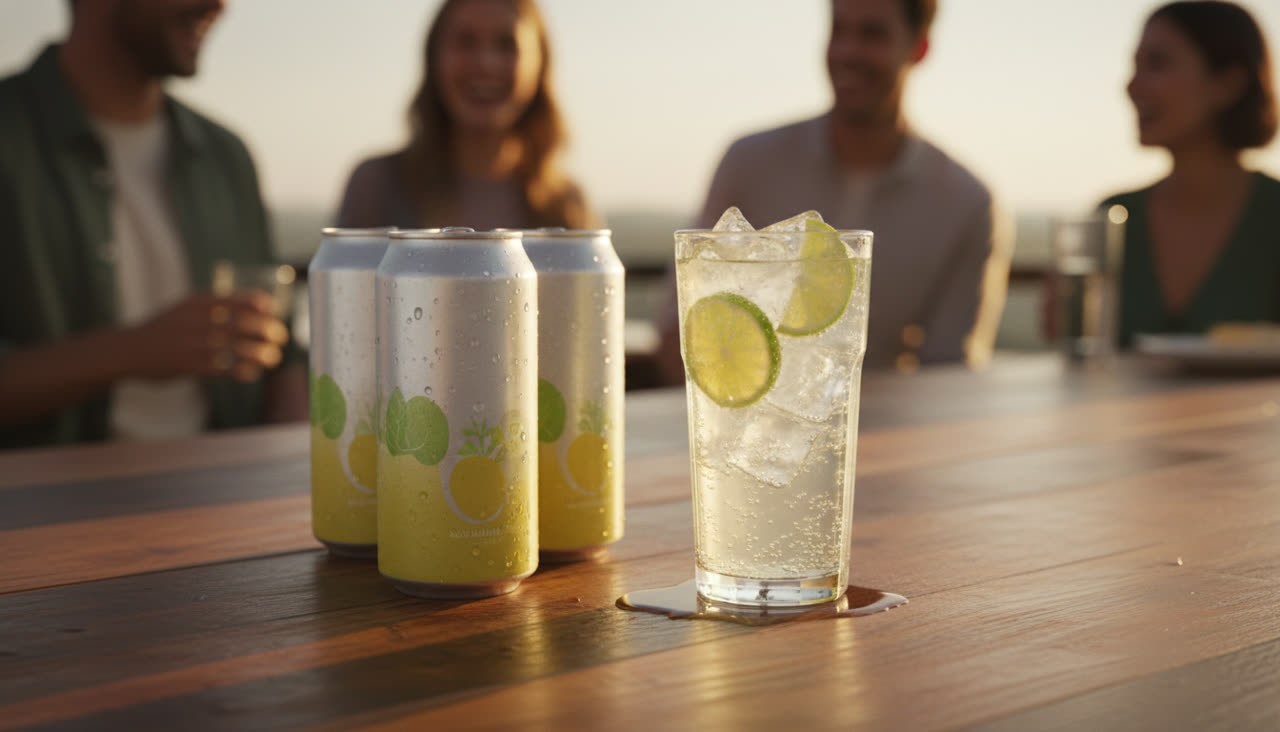
The fastest-growing product in cannabis right now isn't a premium flower or a designer gummy. It's a drink. THC beverages have surged in popularity, with sales climbing as much as 112% year over year in key markets, driven largely by younger consumers who are reaching for a can instead of a cocktail. After two decades watching this industry chase the next big format, I can tell you: this one is different, and it's not a fad.
The reason is a concept the industry calls sessionability. Most cannabis drinks are dosed low — often between 2mg and 5mg of THC — so a person can sip several over an evening, stay social, and stay in control, much like nursing a couple of light beers. That's a fundamentally different value proposition than the old edibles model, and it's unlocking a fundamentally different customer.
The alcohol-alternative moment is real
I don't use the word "generational" loosely, but the shift away from alcohol among younger adults is exactly that. A growing cohort is drinking less — for health, for wellness, for sheer preference — and they want something that fits the same social rituals without the downsides. Low-dose cannabis beverages slot perfectly into that gap: the relaxed, social loosening of a drink, without the hangover, the calories, or the next-day fog.
That's why beverages have become one of the most closely watched categories in the entire market. They're showing up at parties, at dinners, at backyard barbecues — occasions that used to belong exclusively to beer and wine. For the first time, cannabis has a credible, mainstream-friendly answer to "what should I bring?" And unlike a joint, a nicely designed can of infused seltzer carries no stigma at a dinner table.
Beverages are how cannabis finally crashes the happy-hour party — not as a rebellion against alcohol, but as a polished alternative to it.
Technology fixed edibles' oldest problem
Here's the part the casual observer misses. The reason beverages work socially is technical, not just cultural. The classic knock on edibles was unpredictability — you'd eat a gummy, feel nothing for 45 minutes, take more, and then get hit by a wave you couldn't walk back. That's a terrible experience for a social setting.
Modern cannabis drinks largely solve this with nano-emulsion technology, which breaks cannabinoids into tiny particles that absorb faster, producing onset in roughly 15 to 30 minutes rather than the unpredictable hour-plus of traditional edibles. Fast, predictable onset is what makes a beverage behave like a drink — you feel it on a timeline you can plan around, and you can decide whether to have another. That single engineering advance is a big part of why the category is exploding.
A broader shift toward "low and slow"
Beverages are the leading edge of a wider movement away from the "as strong as possible" mentality that defined cannabis's early legal years. Research now suggests 42% of edible consumers prefer doses of 10mg or less. The market is rediscovering that most people don't want to be obliterated; they want a manageable, repeatable, pleasant experience.
This is a maturation I've been waiting years to see. A market obsessed with maximum potency is a market catering to its heaviest users. A market embracing low-dose, controllable products is a market growing its base — welcoming the curious, the cautious, and the wellness-minded. Those are the consumers who expand an industry, and beverages are their gateway.
What it means for shoppers and shops
For consumers, the beverage boom is mostly good news: more approachable products, clearer dosing, and a genuinely social way to enjoy cannabis. The main advice I'd give a newcomer is the oldest advice in the book — start low, read the label, and give it time to work. A 2mg seltzer and a 100mg tincture are both "cannabis," and treating them the same is how people have bad nights.
For dispensaries, beverages are a margin opportunity and a customer-acquisition tool rolled into one, because they bring in people who'd never buy flower. The operators who merchandise this category well — cold, visible, with knowledgeable staff — will own the casual-consumer relationship. If you want to see how the category is developing, you can compare beverage deals and explore the brands stocked at licensed New York dispensaries on High Today, and find what's available near you on the delivery map.
The retail playbook for beverages
For dispensaries, beverages reward a different merchandising instinct than flower, and the operators who get it will pull ahead. Cold matters — a refrigerated, eye-level display signals "drink this now" in a way a shelf-stable can never will, and it dramatically lifts impulse purchases. Placement near the register, framing around occasions ("for the cookout," "for the show," "instead of a nightcap"), and budtenders who can speak to onset time and dosing all turn a curious browser into a repeat buyer. Because the category attracts newcomers and alcohol-switchers, it's also a natural cross-sell gateway into the rest of the store.
The economics reward patience. Beverages often carry healthier margins than commodity flower, and because they're low-dose and social, they tend to drive repeat, multi-unit purchases rather than one-and-done buys. A customer who finds a 3mg seltzer she likes doesn't buy one — she buys a pack, and then another. That's the kind of consumable, habit-forming (in the everyday sense) purchase that builds a stable revenue base. Operators who treat beverages as a serious category rather than a novelty endcap will capture the casual-consumer relationship that defines the next phase of this market. Shoppers can already see how fast it's developing by comparing beverage deals and brands across the legal market.
The cannabis joint isn't going anywhere. But the future of how most people casually consume cannabis is looking less like a cloud of smoke and more like a cold can passed around a table. After twenty years, that might be the most normalizing development I've seen yet.