
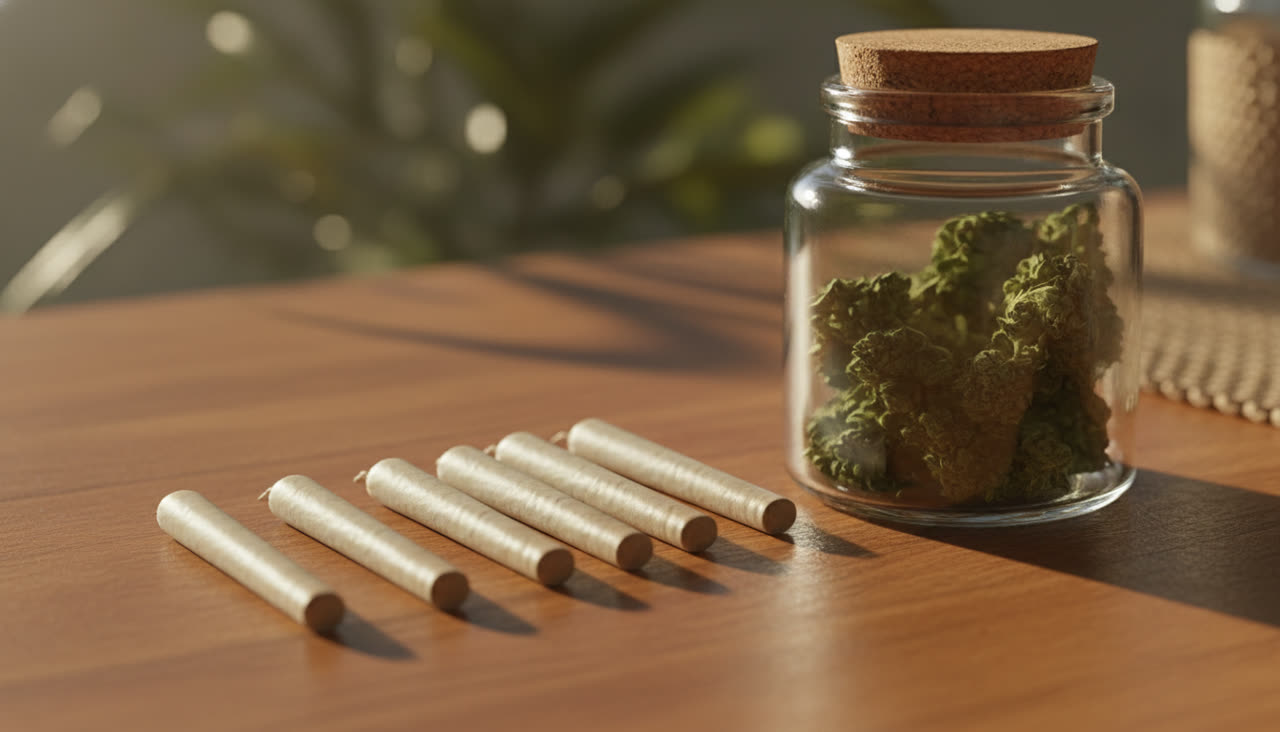
If you only read the headlines, you'd think the future of cannabis is all infused seltzers and microdose gummies. Those categories are genuinely booming — but the 2026 sales data tells a more interesting story underneath the hype: the categories actually gaining dollar sales fastest are the oldest ones in the book. Flower and pre-rolls are leading cannabis's quiet comeback, and it's worth understanding why.
The numbers behind the comeback
The data is clear: flower and pre-rolled products are the major categories adding dollar sales compared to a year ago, growing roughly 3.8% and 3.4% respectively. And when you ask consumers how they actually use cannabis, the answer hasn't changed as much as the trend pieces suggest — about 74% smoke, making it the single most popular method, with edibles and drinks close behind and vaping third at around 40%.
In other words: for all the innovation in formats, a huge share of consumers still want to smoke flower. The classic experience isn't being replaced; it's being refined.
Why pre-rolls are the real story
The most telling part of the data is the pre-roll surge, because it captures where the market is really heading: convenience layered onto tradition. A pre-roll gives you the full flower experience — the ritual, the terpenes, the immediate effect — without the grinding, rolling, or fuss. It's the grab-and-go version of the most popular consumption method, and that combination is exactly what modern consumers reward.
This mirrors the broader convenience trend reshaping all of cannabis. The same impulse that drives low-dose beverages and fast-onset edibles is driving pre-rolls: people want the experience they like, with less friction. Pre-rolls just deliver it to the consumers who never wanted to leave flower in the first place.
The future of cannabis isn't flower versus edibles. It's flower made more convenient, edibles made more predictable, and drinks made more social — convenience winning across every category.
What it means for the market
For operators and brands, the lesson is to not over-rotate on the shiniest new categories at the expense of the core. Flower remains the foundation of the cannabis market, and pre-rolls are where a lot of that foundation is quietly modernizing. Brands that nail pre-roll quality — good flower, fresh, consistently rolled, well-packaged — are tapping into the largest, most durable slice of demand, not a niche.
It's also a reminder of how diverse the consumer base has become. The market isn't migrating en masse from one format to another; it's fragmenting into occasions. Someone might sip a low-dose beverage at a barbecue, take a microdose gummy for sleep, and smoke a pre-roll to unwind on the weekend — all the same consumer, different moments. A healthy market serves all of those.
For shoppers
If flower and pre-rolls are your thing, you're in good company — and the competition among brands and shops works in your favor. Quality and price vary widely, so it pays to compare before you buy. You can scan the day's cannabis deals on flower and pre-rolls, explore the brands stocked across the city, and find licensed dispensaries near you on High Today.
What's driving flower's resilience
Why is the oldest format proving so durable? A few reasons worth naming. Flower is the most cost-effective way to buy THC by weight, which matters more than ever as budget-conscious consumers shop carefully in a high-cost-of-living era — and you can see that price-sensitivity play out in how aggressively shops compete on flower deals. It's also the most transparent product: you can see it, smell it, and judge its quality in a way you simply can't with a processed edible or distillate vape, and a more educated consumer base increasingly values that.
There's a cultural pull, too. As cannabis premiumizes, appreciation for the plant itself — its cultivars, its terpene profiles, its craft cultivation — has grown the way wine appreciation centers on the grape. Flower is where that connoisseurship lives. Pre-rolls extend it by removing the only real friction flower ever had: preparation. The result is a category that's simultaneously the budget choice and the connoisseur choice, which is a rare and powerful position for any product to hold. That dual appeal is a big part of why flower keeps quietly leading the market's growth while flashier formats get the headlines.
For the budtender and the brand, the takeaway is to respect the core while improving it. The flower buyer of 2026 is more discerning than ever — reading terpene percentages, asking about cultivation, judging freshness — and the pre-roll buyer wants that same quality without the prep. Brands that treat pre-rolls as a dumping ground for low-grade trim are missing the moment; the ones winning are packing pre-rolls with quality flower, sometimes infused, always fresh, and merchandising them as a premium convenience rather than an afterthought. That's the difference between riding the trend and being run over by it. For shoppers, the practical edge is to apply the same scrutiny you'd give loose flower to your pre-rolls, and to compare what's on offer — you can scan the day's cannabis deals and brands across licensed dispensaries on High Today before you buy.
The bottom line
The most over-hyped narrative in cannabis is that the classics are fading. The data says otherwise: flower and pre-rolls are leading the market's dollar growth, smoking is still king, and the pre-roll boom shows that convenience — not replacement — is the real trend. New formats are expanding the market, but they're growing alongside the old guard, not on top of it. After twenty years, it turns out a lot of people still just want good flower, made easy. That's not nostalgia. That's the market.