
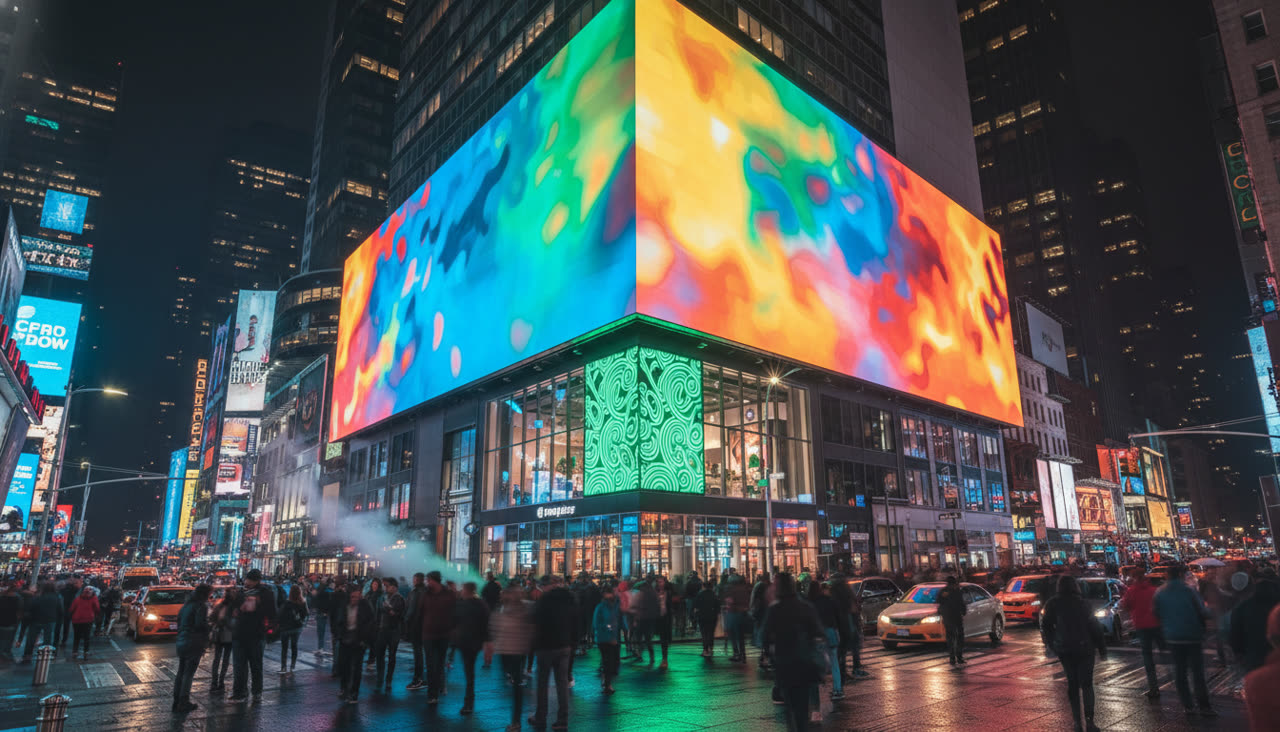
Times Square has sold a lot of things over the years — Broadway tickets, knockoff watches, costumed characters, the most expensive advertising real estate on earth. Now, increasingly, it's selling legal cannabis. Operators in the area say the famous crossroads has become a genuine "cannabis destination," with both tourists and locals seeking out licensed storefronts in one of the busiest stretches of the planet. For those of us who remember when a dispensary near Times Square would have been unthinkable, the symbolism is hard to overstate.
This isn't a story about one shop having a good month. It's a story about what happens when stigma collapses in the most public space imaginable.
Tourism is the unfair advantage
The commercial logic is simple and powerful. Times Square draws enormous, relentless crowds — and a meaningful share of those visitors come from states and countries where cannabis is still illegal or where the legal market is thin and inconvenient. For them, a licensed New York dispensary isn't just a purchase; it's an experience, part novelty and part bucket-list convenience.
That dynamic hands operators in the district a customer base most neighborhood shops can only dream of. A dispensary on a quiet residential block lives and dies by its regulars. A dispensary near Times Square wakes up every morning to a fresh crowd of hundreds of thousands. Of course, that visibility comes at a price — the rents are punishing and the competition is fierce — but the top of the funnel is enormous.
Reclaiming corridors the gray market used to own
Here's the part that matters for the health of the legal industry. For years, the most visible cannabis presence in New York's tourist corridors was unlicensed — the ubiquitous smoke shops that sprang up faster than regulators could close them. They owned the convenient corners and the high-traffic blocks precisely because those locations are valuable.
Watching licensed operators now plant flags in that same prime real estate tells you the legal market has matured enough to compete for it. That's a meaningful shift. Every licensed dispensary that succeeds in a high-visibility location is a daily, public argument for the legal market — tested products, carded customers, tax-paying businesses — in a spot where the gray market used to set the tone.
When the most-photographed intersection on earth becomes a legal weed corridor, the cultural argument is essentially over. The stigma is fading in real time.
What it signals about the broader market
I read this as a leading indicator, not a curiosity. Retail follows confidence. Operators don't sign Times Square-adjacent leases unless they believe the legal market is durable and the customer demand is real. The emergence of a cannabis retail cluster in such a high-profile, high-cost location is a vote of confidence in New York's trajectory — the same trajectory that just produced 600 dispensaries and billions in sales.
It also reflects a normalization that goes beyond commerce. Cannabis retail sitting comfortably alongside Broadway theaters and flagship stores is the kind of mainstreaming that policy alone can't manufacture. It has to happen in the culture, in the streetscape, in the ordinary experience of walking through a neighborhood. Times Square is about as mainstream as American public space gets.
The practical takeaway for shoppers
For visitors and locals alike, the lesson is to shop smart. The convenience of a Times Square location is real, but so is the price premium that comes with the world's most expensive zip code. The savvy move is to know what a product should cost before you walk in. Comparing prices across licensed New York dispensaries and scanning the day's cannabis deals on High Today can save you real money — sometimes a lot of it — on the exact same product.
If you're new to the legal market, it's also worth getting familiar with the brands before you buy, so you're choosing on quality rather than packaging. And if you'd rather not fight the Times Square crowds at all, the delivery map shows what's available near you.
The risks behind the boom
Let me add the veteran's caveat, because a destination corridor is not a guaranteed goldmine. Times Square real estate is among the most expensive on earth, and a location that good comes with overhead that can swallow a thin-margin business alive. The foot traffic is enormous, but it's also transient — a river of one-time buyers rather than a base of loyal regulars. Operators who win here have to convert that novelty traffic into something durable: an email sign-up, a loyalty program, a memorable enough experience that a tourist tells friends or orders again from home.
There's also a saturation risk. When everyone recognizes that a corridor is hot, leases get bid up and shops cluster until the math stops working for the marginal operator. And in a high-visibility location, security and reputation carry outsized weight; one bad headline in a place this watched can undo a lot of goodwill. My read is that Times Square will reward a handful of well-capitalized, well-run operators and punish the ones who mistook a great location for a business model — the same shakeout that plays out in every premium retail corridor, cannabis or not. For shoppers, the takeaway is the same as ever: the convenience is real, but so is the markup, so it pays to know the going rate by checking deals and the dispensary directory before you buy.
A licensed dispensary thriving in Times Square would have sounded like a punchline a decade ago. Today it's a data point — one more sign that legal cannabis in New York has moved from the margins to the mainstream, in the most visible possible place. And once something becomes ordinary in the most-watched intersection on earth, there is no putting it back in the shadows.