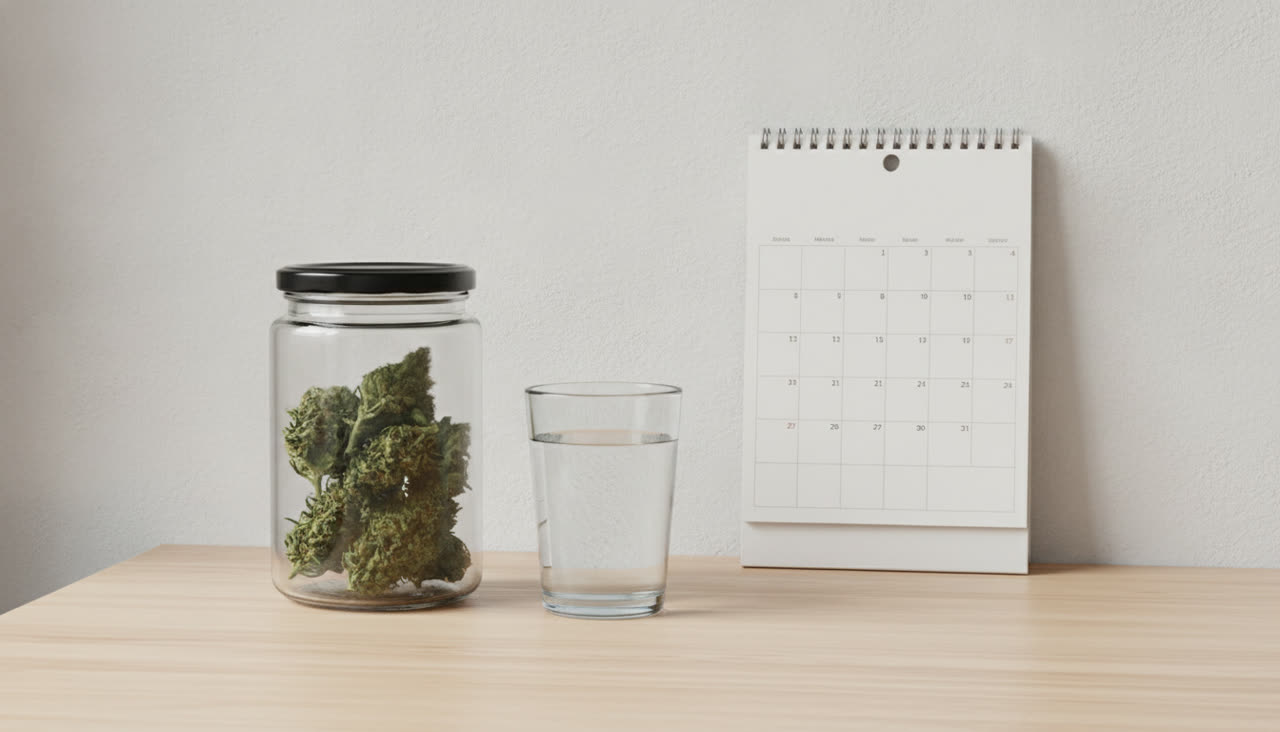
Here's a scenario every regular cannabis user eventually recognizes: the amount that used to get you nicely high now barely registers, so you use more, and a few weeks later that stops working too. The instinct is to keep increasing the dose, but that's a treadmill. The real solution is counterintuitive and almost free: stop for a while. Welcome to the tolerance break — the most reliable reset in cannabis.
Why tolerance happens
THC works by binding to CB1 receptors in your endocannabinoid system. When you use cannabis frequently, your body adapts by making those receptors less responsive — a process called downregulation. The result is tolerance: you need more THC to feel the same effect. This is a normal, well-documented physiological response, not a sign anything is wrong. It's also why a higher THC number isn't the answer once tolerance sets in — you're chasing a moving target.
What a T-break does
The good news is that this adaptation reverses. When you stop using THC, your CB1 receptors gradually recover their sensitivity. After a break, the same dose that did nothing last month feels genuinely strong again — often surprisingly so. A tolerance break essentially restores cannabis to factory settings, which means more effect for less product and less money.
How long should a break be?
There's no single right answer, because it depends on how much and how often you've been using. As a rough guide:
| Break length | Typical effect |
|---|---|
| 48 hours | A noticeable partial reset for lighter users |
| ~1 week | A solid reset for many regular users |
| 2 weeks | A fuller reset, useful for heavy daily users |
Receptor sensitivity recovers meaningfully within the first week or two for most people, so you don't need to quit for a month to see real benefit. Even a short pause helps; a week is a common sweet spot.
How to make a T-break easier
If you're a frequent user, the first few days can come with mild, temporary effects — irritability, unusually vivid dreams, or some trouble sleeping. They're generally minor and fade within a few days. A few things smooth the process:
- Stay busy. Fill the time you'd normally spend consuming with activity — exercise, hobbies, plans.
- Sleep and hydrate. Both ease the adjustment and help with the temporary sleep disruption.
- Lean on CBD. Non-intoxicating CBD doesn't build THC tolerance, so a CBD product can offer some calm during a break without undoing it.
- Pick your window. A vacation, a busy work stretch, or any naturally distracted period makes the time pass easily.
Alternatives to a full break
If a complete pause feels like too much, you can also slow tolerance without stopping entirely. Lowering your dose — even microdosing — reduces how hard you're pushing your receptors. Rotating in CBD-forward products keeps effects gentler. And simply using less often naturally keeps tolerance in check. Think of these as maintenance; the full T-break is the deep reset.
The money angle
It's worth saying plainly: tolerance breaks save money. Chasing rising tolerance with ever-bigger doses is expensive and ultimately futile, because tolerance just climbs to meet it. A periodic break means you get more out of every gram and every milligram — your products last longer and hit harder. When you do restock, comparing deals on High Today across licensed dispensaries stretches it further still.
The bottom line
If cannabis has stopped delivering, more is rarely the fix — a break is. Tolerance builds because your receptors adapt, and it fades when you give them a rest. Take anywhere from a couple of days to a couple of weeks, keep busy, and enjoy the genuinely stronger, cheaper experience waiting on the other side. Sometimes the best thing you can do for your cannabis routine is, briefly, nothing at all. Educational only — not legal, medical, or financial advice. For adults 21+.