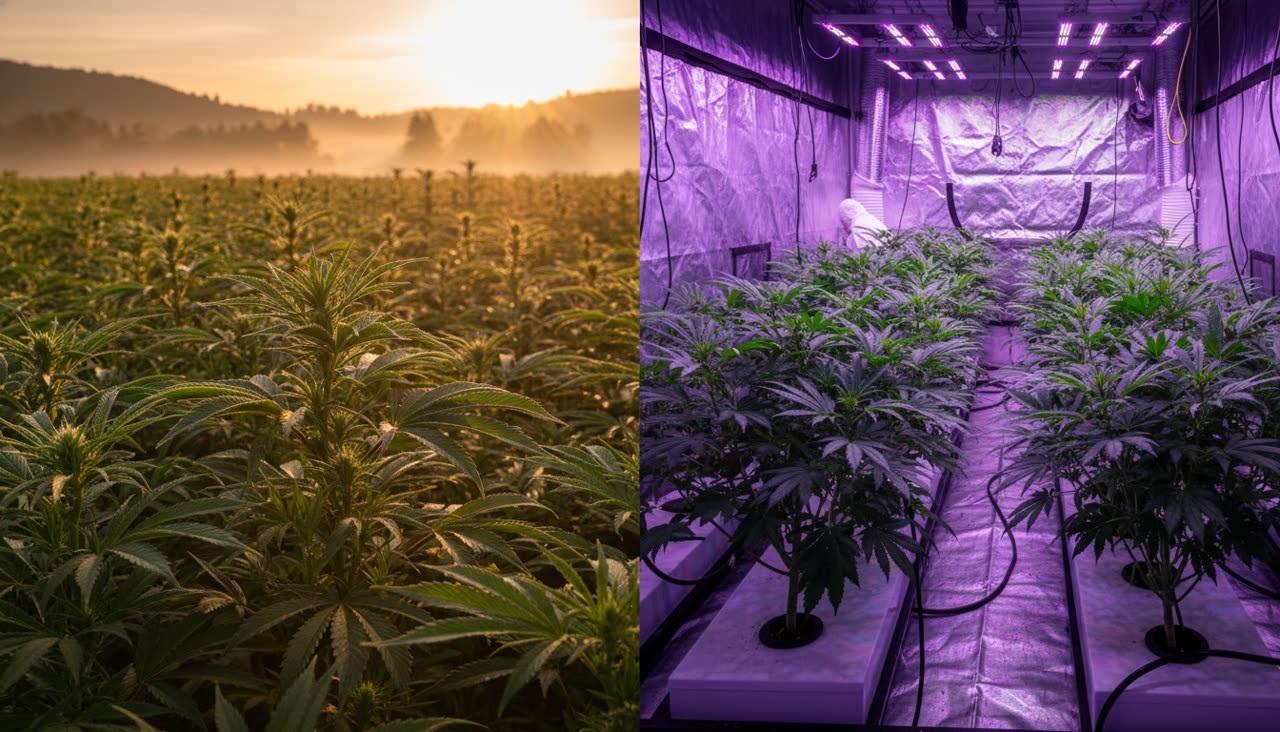
Two flowers can be the same strain and still feel like different products — because how cannabis is grown shapes everything from its look to its price to its character. The biggest divide is sun-grown versus indoor, and understanding it will make you a sharper shopper at any New York dispensary, where both styles now sit side by side on the menu. New York's geography — cold winters, warm summers, fertile valleys — also makes this a uniquely interesting market for cultivation, with growers experimenting across the full spectrum from sealed rooms to open fields.
Indoor: control and curb appeal
Indoor cannabis is grown in climate-controlled rooms under artificial lights, where cultivators dial in temperature, humidity, CO2, airflow, and light cycles with precision. The payoff is dense, frosty, photogenic buds with high, consistent potency — the kind of flower that looks like a magazine cover. Because every variable is controlled, indoor grows can chase the highest THC numbers and the most exotic terpene expressions year-round, regardless of season or weather.
The trade-offs are cost and footprint. All that climate control and high-intensity lighting consumes enormous amounts of electricity — indoor cultivation is one of the most energy-hungry forms of agriculture there is. That makes indoor flower expensive to produce and heavier on the environment, costs that get passed to the shelf. New York's Bouquet is a good example of the upside, known for premium indoor flower with exotic terpene profiles. For consumers who prize appearance, peak potency, and bag appeal above all, indoor is usually the answer.
Why indoor looks the way it does
The tight, rock-hard bud structure and heavy frost of top-shelf indoor aren't an accident — they're the product of controlling light intensity and spectrum, keeping humidity in a narrow band to prevent mold, and harvesting at the precise moment trichomes peak. That same control is what lets an indoor grower replicate a beloved cut batch after batch, which matters enormously for brands selling on consistency.
Sun-grown: sustainability and terroir
Sun-grown cannabis (outdoor or greenhouse) harnesses natural sunlight, which makes it far more sustainable and affordable. The sun is free, full-spectrum, and impossibly powerful compared to any lamp — which is why outdoor plants can grow enormous and yield heavily. Sun-grown also opens the door to terroir — the wine-world idea that a specific place's sun, soil, water, and climate shape the final product. New York's Hudson Cannabis has built its identity on sun-grown Hudson Valley flower and sustainable, regenerative farming.
The old knock on sun-grown — that it was lower quality, looser, or harsher — has faded fast as growing techniques, genetics, hand-trimming, and post-harvest curing improve. Modern craft sun-grown can be every bit as flavorful and satisfying as indoor, often at a fraction of the price. Its main vulnerabilities are weather, pests, and a compressed outdoor season, which is exactly what the greenhouse approach is designed to solve.
The middle ground: greenhouse and mixed-light
Most cultivation isn't a strict either/or. Greenhouse and mixed-light growing splits the difference, combining natural sunlight with supplemental lighting, light-deprivation tarps, and some environmental control. It captures much of the cost and sustainability advantage of the sun while smoothing out the weather and extending the season — a popular and pragmatic approach for New York's climate. Light-deprivation greenhouses can even trigger flowering on the grower's schedule, allowing multiple harvests a year from natural light. For many New York brands, greenhouse is the sweet spot: better value than indoor, more consistency than pure outdoor.
The sustainability angle
The environmental gap between the two methods is large and increasingly part of the conversation. Indoor cannabis is genuinely energy-intensive — the lighting, dehumidification, air conditioning, and CO2 systems can give a single indoor crop a carbon footprint many times that of the same plant grown in the sun. As consumers and regulators pay more attention to sustainability, sun-grown and greenhouse flower has a real story to tell: it leans on free, full-spectrum sunlight and regenerative outdoor soil practices rather than the grid. For New York's small craft farmers, that's both an environmental virtue and a marketing edge, and it dovetails with the state's stated goal of supporting a diverse, equitable, and sustainable cultivation sector rather than a handful of giant warehouse grows.
How the methods compare
| Factor | Indoor | Sun-grown / greenhouse |
|---|---|---|
| Appearance | Dense, frosty, uniform | More variable; can be excellent |
| Peak potency | Often highest | Strong, sometimes a touch lower |
| Terpene/flavor | Exotic, controlled | Rich, terroir-driven |
| Price | Premium | More affordable / best value |
| Sustainability | Energy-intensive | Low-impact, uses free sunlight |
| Consistency | Very high, year-round | Seasonal influence |
| Yield per plant | Moderate, tightly managed | Often very large outdoors |
What it means for your purchase
Neither is simply 'better' — they're different tools for different priorities:
- Want the most potent, best-looking bud and don't mind paying? Indoor.
- Want value, sustainability, and a sense of place? Sun-grown or greenhouse.
- Care most about flavor? Both can deliver — it comes down to the specific cultivar, the terpene profile, and the grower, not the lighting alone. And remember that THC percentage isn't everything, so don't let indoor's headline numbers automatically win the day.
It's also worth noting that growing method matters for more than just smokable flower. Much of New York's solventless hash and rosin is made from fresh-frozen material where terpene preservation is everything, and both indoor and quality sun-grown source material can produce exceptional extracts.
Increasingly, the cultivation method is a feature brands advertise, not a detail they hide — you'll often see 'sun-grown,' 'greenhouse,' or 'indoor' right on the label. Many of these growers also lead New York's craft scene; see our roundups of the best New York-grown brands and the small craft growers worth knowing.
How to shop with this in mind
Check the label and brand for how something was grown, then weigh it against your priorities and budget. A few practical moves:
- If a price seems high, check whether you're paying for indoor — and decide if that premium is worth it to you for this purchase.
- For everyday smoking, give well-cured greenhouse and sun-grown flower a real chance; the value is often outstanding.
- To compare options, look at today's deals across licensed dispensaries on High Today, and browse New York brands to find sun-grown and indoor specialists alike.
New York's licensing and cultivation rules are overseen by the state Office of Cannabis Management (cannabis.ny.gov), which has built cultivation tiers that deliberately support small outdoor and greenhouse farmers alongside larger operations.
The bottom line
Indoor delivers potency and curb appeal at a premium; sun-grown and greenhouse deliver value, sustainability, and terroir. Neither is universally superior — knowing which you're holding, and why it costs what it does, turns a confusing wall of jars into an informed choice that fits your taste and your wallet. Educational only — not legal, medical, or financial advice. For adults 21+.