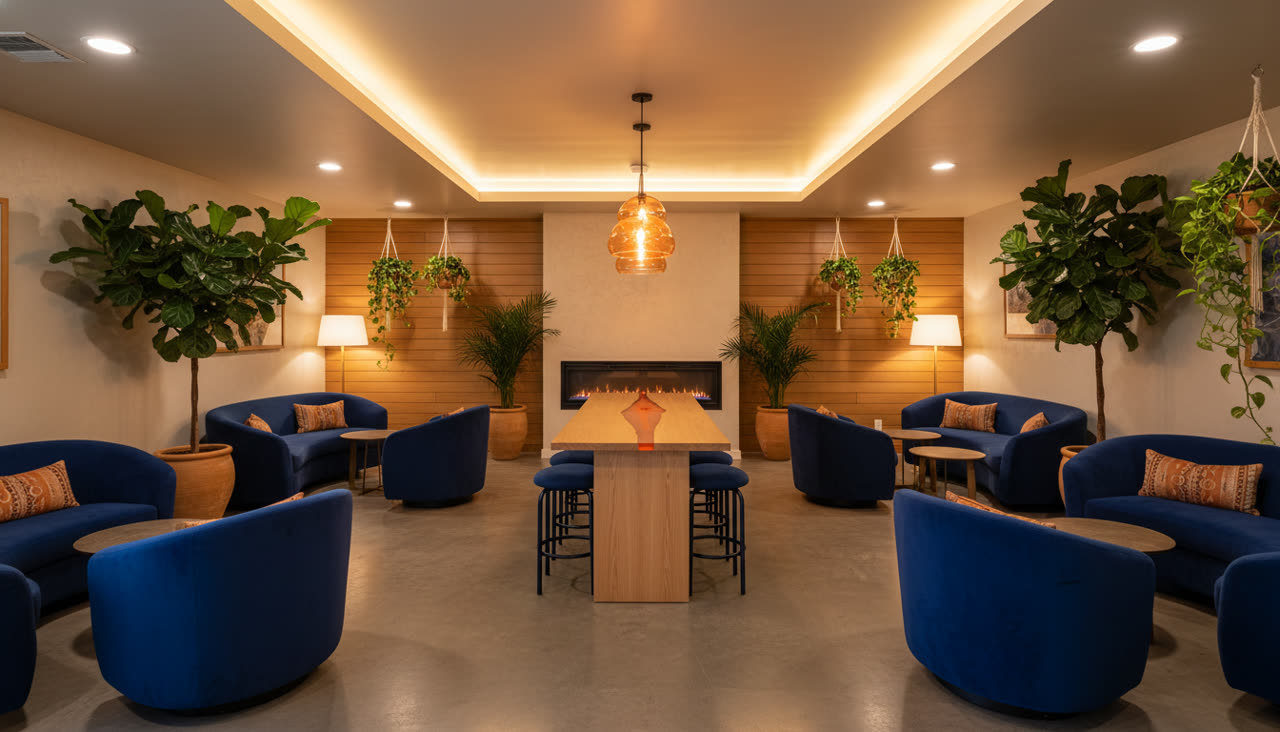
Of all the promises of legalization, few sounded more appealing than the cannabis lounge: a clean, legal, social place to consume — part coffeehouse, part bar, finally above-board. New York wrote them into law back in 2021. Yet here we are in mid-2026, and the lounges are still almost nowhere to be found. The reasons say a lot about how hard the 'fun' part of legalization turns out to be.
What a lounge actually is
Under the Marijuana Regulation and Taxation Act (MRTA), a consumption lounge is a licensed venue where adults 21+ can gather and consume cannabis on-site in a controlled environment — conceptually like a bar. Crucially, lounges are not dispensaries: they can store and make cannabis available for on-site use (sourced from licensed distributors, ROs, cooperatives, or microbusinesses), but they generally can't sell you products to take home. The model is hospitality, not retail.
The bottlenecks
So why the holdup? It's a stack of overlapping obstacles:
- Rules. Final OCM regulations for lounges have been slow to land — the same deliberate pace that has characterized New York's entire rollout.
- Zoning. Lounges can't operate within 500 feet of school grounds or 200 feet of a house of worship, which rules out a surprising amount of dense, desirable real estate.
- Ventilation and building standards. On-site smoking demands serious ventilation engineering and code compliance.
- Insurance. Coverage for a venue where people consume cannabis on the premises is scarce and expensive.
Any one of these is a hurdle; together they've kept operational lounges to a trickle even as licenses slowly move through the pipeline.
Why it matters
Lounges aren't just a novelty. They're the answer to a real problem: where can people legally consume? Renters whose leases ban smoking, tourists with no private space, and anyone who wants a social setting currently have few legal options. Lounges would also create a new hospitality category — jobs, nightlife, tax revenue — and bring consumption out of legal gray zones. Their absence is a gap in the legal market that the gray market is happy to fill.
Until they arrive, the rules for where you can consume still matter: generally wherever tobacco smoking is allowed, but never in a vehicle, on school grounds, or where local rules say no. For the products themselves, licensed dispensaries remain the place to shop, and you can compare deals on High Today.
The bottom line
Five years after they were legalized, New York's cannabis lounges are still stuck between ambition and bureaucracy — held up by zoning, ventilation, insurance, and the slow grind of rulemaking. They're coming, eventually. But the long wait is a reminder that legalizing something and actually building it are very different things. For adults 21+.