
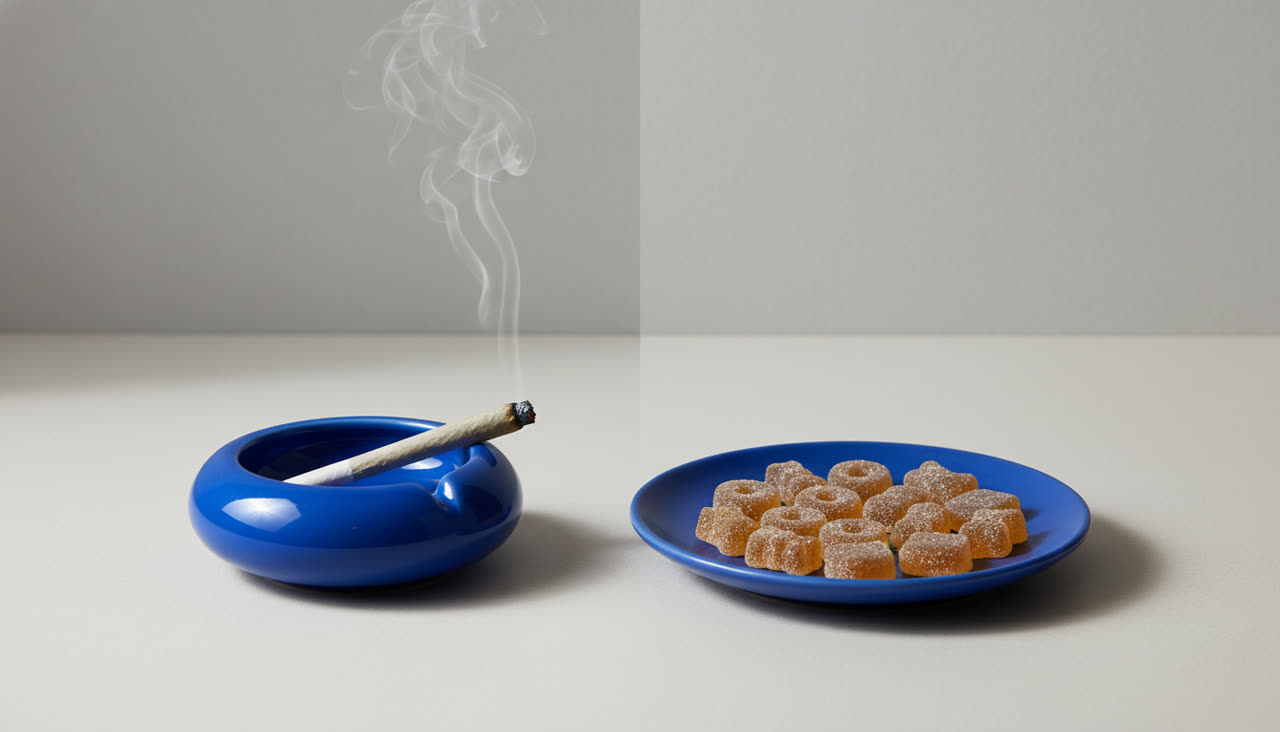
One of the most common rookie mistakes in cannabis has nothing to do with what you consume and everything to do with how long it takes. The onset and duration of a cannabis high vary dramatically by method, and understanding the timeline is the difference between a pleasant afternoon and an uncomfortable one. This guide compares smoking, vaping, and edibles head to head — onset, peak, and duration — so you can match the method to your day and avoid the single biggest beginner error in New York's legal market.
Smoking and vaping: fast and short
When you inhale cannabis, THC reaches your bloodstream through your lungs almost immediately. Effects usually begin within minutes, peak around 10 to 30 minutes, and fade over 1 to 3 hours. That fast feedback loop is the big advantage: you can feel how a product affects you quickly and decide whether you want more. For newcomers who want control, inhalation is the most predictable way to learn your limits. A vape or a pre-roll gives you that minute-by-minute feedback that an edible simply can't.
Edibles: slow, strong, and long
Edibles are a completely different curve. Because the THC travels through your digestive system and liver before it reaches your bloodstream, effects can take 30 minutes to 2 hours to begin — and then last 4 to 8 hours or more. The liver converts THC into a compound called 11-hydroxy-THC that's more potent and longer-lasting, which is why an edible high often feels heavier and more body-centered than smoking. It's a marathon, not a sprint.
The method timeline at a glance
| Method | Onset | Peak | Typical duration | Best for |
|---|---|---|---|---|
| Smoking flower | Within minutes | 10–30 min | 1–3 hours | Control, short sessions |
| Vaping | Within minutes | 10–30 min | 1–3 hours | Discreet, fast feedback |
| Fast-acting drinks | 15–45 min | 30–90 min | 2–4 hours | Social, dialed-in dosing |
| Edibles (gummies, chocolate) | 30 min–2 hrs | 1–3 hours | 4–8+ hours | Long, gradual relaxation |
The mistake everyone makes
Here's the single most important thing a new consumer can know: the slow onset of edibles is what trips people up. Someone eats a gummy, feels nothing after 45 minutes, assumes it didn't work, eats another — and then both doses hit at once, hours into an evening they can't undo. The fix is simple: take one low dose, then wait a full two hours before even considering more. New York's standard edible serving is 10 mg of THC — a figure set by the Office of Cannabis Management — and beginners often start at just 2.5 to 5 mg. Our guide to reading a New York dispensary label shows exactly where those milligram figures appear so you can dose deliberately.
How to choose your method
- Want control and a short experience? Inhalation lets you titrate easily and feel effects in minutes.
- Want a social, dialed-in option? A fast-acting THC drink lands faster than a gummy and wears off sooner — handy for an evening out.
- Want a long, gradual, relaxing stretch? Edibles deliver, as long as you respect the timeline and clear your schedule.
- New to all of it? Start with a low-dose product and don't redose impatiently. Choosing between formats? Our comparison of vapes vs. flower vs. concentrates breaks down the trade-offs.
Whatever method you choose, buy from a licensed dispensary so you know the potency is lab-tested and accurately labeled — and compare cannabis deals on High Today to find the right product at the right price.
What affects how long it lasts
The ranges above are typical, but several factors push your experience toward the short or long end of the scale:
- Dose. A higher dose generally means a longer, more intense experience — and a slower comedown.
- Tolerance. Regular consumers process cannabis faster and feel shorter effects than occasional users at the same dose.
- Metabolism and body chemistry. With edibles especially, how quickly your body processes THC varies person to person.
- Full vs. empty stomach. Eating an edible on an empty stomach can speed onset; with food, it may come on slower but feel smoother.
- Product type. A balanced THC-and-CBD product or a full-spectrum one can feel different from a high-THC distillate at the same dose.
Why duration matters for planning
The timeline isn't trivia — it's planning. An edible taken at 8 p.m. can still be working at 2 a.m., which is great for a long, lazy night and terrible before an early morning. Inhaled cannabis, by contrast, lets you reset within a couple of hours. Match the curve to your obligations and you'll rarely be caught off guard.
What to do if you've had too much
Even careful consumers occasionally overshoot, almost always with edibles. The reassuring news: an uncomfortable cannabis high is temporary and passes on its own. If it happens, stay calm, find a quiet space, hydrate, and wait it out — the peak fades within a few hours. Some people find a little CBD, a snack, or a nap helps take the edge off. You can't undo an edible, but you can ride it out safely, which is exactly why the slow-onset, wait-two-hours rule matters so much.
The bottom line
Inhaled cannabis is fast and short; edibles are slow, strong, and long. Most bad experiences come from treating an edible like a joint and redosing before it kicks in. Know the timeline, start low, give it a full two hours, and pick the method that fits your day.
Educational only — not legal, medical, or financial advice. For adults 21+.