
Ask a casual consumer what makes cannabis work and they'll usually say one thing: THC. It's the famous compound, the one printed on the label in big numbers. But anyone who's spent real time with the plant knows the story is bigger — and the concept that captures it is the entourage effect. This guide explains what the entourage effect is, why two products with identical THC numbers can feel completely different, and how to use the idea to shop smarter in New York's legal market.
The team, not the star
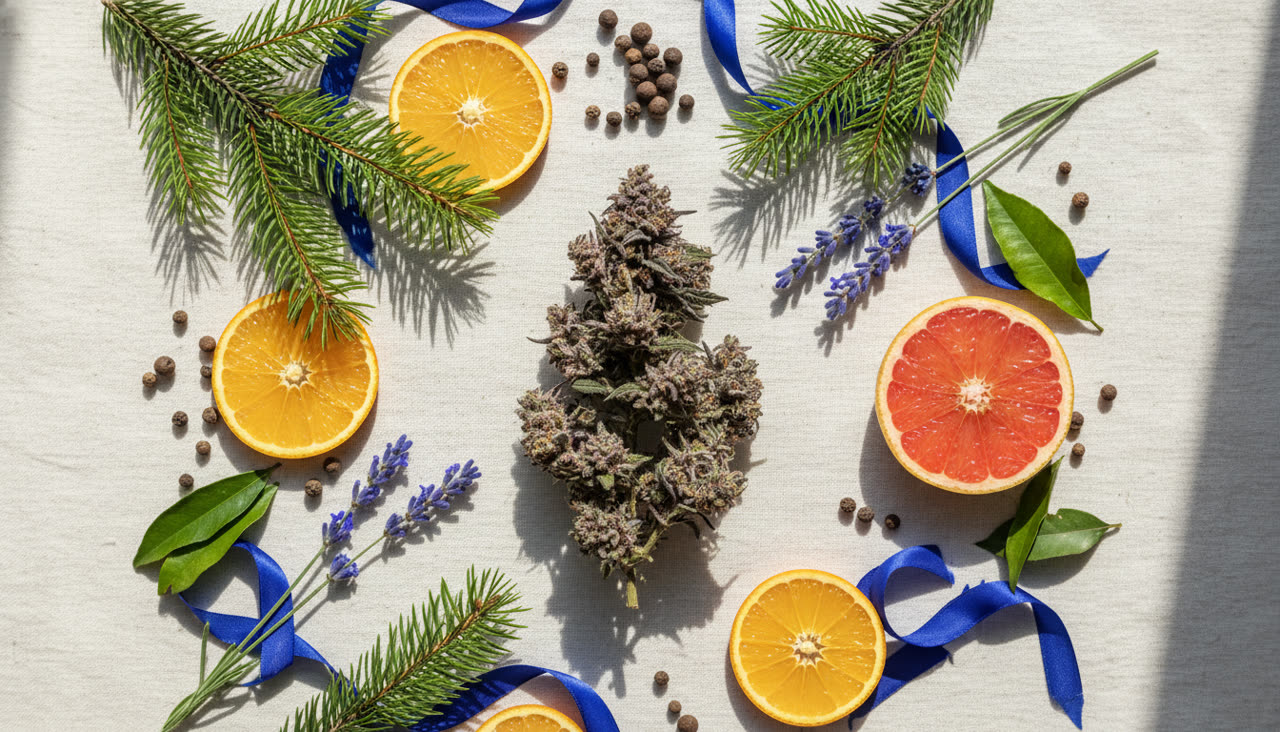
The entourage effect is the idea that cannabis compounds work together, producing an experience greater than any single molecule in isolation. THC is the headliner, but it shares the stage with other cannabinoids — like CBD, CBN, and CBG — and with terpenes, the aromatic compounds that give cannabis its smell. The theory is that these pieces interact, shaping and rounding out the effect rather than THC acting alone. Think of it less as a solo performance and more as a band, where the supporting players change the whole sound.
Why it matters in the real world
Here's where it gets practical. Two products can both list, say, 20% THC and feel noticeably different. A full-spectrum product that retains the plant's natural range of cannabinoids and terpenes often feels fuller or more balanced than a distillate refined down to mostly pure THC. CBD can temper the intensity; specific terpenes are associated with calmer or brighter experiences. That's the entourage effect in action — and it's why our guide to why a higher THC percentage isn't always better argues you shouldn't shop on the biggest number alone.
Meet the supporting cast
The key players each bring something to the experience:
| Compound | What it is | Possible role in the effect |
|---|---|---|
| THC | The primary intoxicating cannabinoid | Drives the core psychoactive experience |
| CBD | Non-intoxicating cannabinoid | May soften or balance THC's intensity |
| CBN | Minor cannabinoid | Often associated with relaxation |
| Myrcene | Earthy, musky terpene | Linked to relaxing, sedating character |
| Limonene | Citrusy terpene | Linked to brighter, uplifting character |
| Caryophyllene | Peppery terpene | Interacts with the body's receptors directly |
Our beginner's guide to terpenes goes deeper on each aroma compound and what it tends to do.
A short history of the idea
The entourage effect isn't marketing jargon — the term was popularized by researchers studying how cannabis compounds interact, and it has been refined over decades of work on the plant's chemistry. The core observation is old news to anyone who grows or formulates cannabis: whole-plant preparations often behave differently from isolated molecules. As legal markets like New York's matured and lab testing became standard, the idea moved from grower folklore into something shoppers can actually act on, because labels now disclose the cannabinoids and terpenes that the theory is built around.
Is it settled science?
Not entirely — it's a strong, well-supported working theory rather than a closed case. Researchers are still mapping exactly how these compounds interact in the body, and effects vary from person to person. But the idea lines up with what a great many experienced consumers and clinicians report, and it's a far more useful lens than chasing THC percentage alone.
Full-spectrum, broad-spectrum, and isolate
You'll see these terms on products and in budtender conversations:
- Full-spectrum keeps the plant's natural mix of cannabinoids (including THC) and terpenes — the best candidate for the entourage effect.
- Broad-spectrum keeps the supporting cannabinoids and terpenes but removes or minimizes THC, for people who want the entourage without the intoxication.
- Isolate / distillate strips everything down to a single, near-pure cannabinoid — potent and consistent, but without the supporting cast.
Neither is inherently better; they're different tools. If you're chasing a particular feel rather than raw potency, full-spectrum is usually where to look.
What to do with this when you shop
- Don't shop on THC percentage alone. It's one number, not the whole picture.
- Notice CBD content. A bit of CBD alongside THC often makes for a more balanced, less racy feel.
- Pay attention to terpenes. They're the clearest clue to a product's character — learning to read them on a New York dispensary label is a quiet superpower.
- Ask about full-spectrum options when you want the entourage effect working for you. Solventless products like live rosin tend to preserve the plant's full profile.
A good budtender at a licensed dispensary can point you to full-spectrum products and explain their profiles. Because only licensed shops sell lab-tested products with verified cannabinoid and terpene data — the kind regulated by New York's Office of Cannabis Management — they're the only place you can reliably shop the full profile rather than a guess. You can also browse New York brands and compare deals on High Today once you know what you're looking for.
The bottom line
Cannabis isn't a one-ingredient product. The entourage effect is the reminder that THC, CBD, minor cannabinoids, and terpenes work as a team — and that the smartest shopping looks at the whole profile, not just the biggest number on the label. Learn to read the supporting cast, and you'll find products that actually fit how you want to feel.
Educational only — not legal, medical, or financial advice. For adults 21+.