
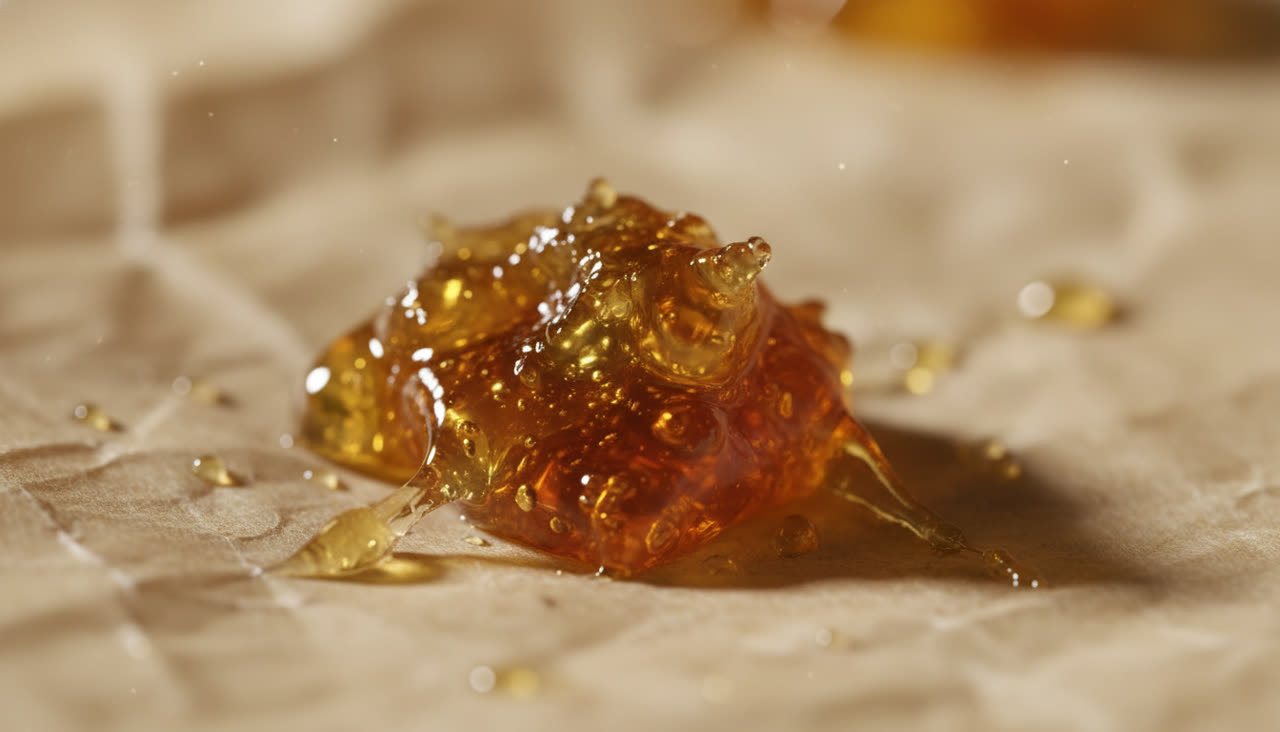
In the world of cannabis concentrates, one term gets connoisseurs talking more than any other: live rosin. It's the craft-beer-and-single-origin-coffee end of the market — prized for flavor, purity, and the care it takes to make. In New York's legal market, where solventless craft has become a genuine strength, live rosin sits at the top of most concentrate menus and commands the highest prices. This guide explains what it actually is, how it's made step by step, how it differs from the similar-sounding live resin, and why experienced consumers happily pay a premium for it.
What is live rosin?
Live rosin is a solventless cannabis concentrate made using only heat and pressure — no chemical solvents. The word live signals that it starts from fresh-frozen cannabis: flower frozen right after harvest rather than dried and cured, which locks in the most aromatic terpenes before they can degrade. That fresh-frozen material is first washed into ice-water hash and then pressed into rosin. The result is a full-flavored, true-to-the-plant extract that captures the living cultivar more faithfully than almost any other format — which is exactly why it has become the benchmark for craft cannabis.
Solventless, explained
The key word is solventless. Many concentrates are made by blasting cannabis with chemical solvents like butane, propane, or CO2 to strip out the resin, then carefully purging those chemicals afterward to safe limits. Rosin skips the chemicals entirely. It's made by literally squeezing the resin out of the plant with heat and pressure, so there's nothing to purge and nothing left behind.
That clean process is the whole appeal. There's no chance of residual solvent, the production is mechanical rather than chemical, and the gentle handling preserves the delicate aromatic compounds that give each strain its character. For consumers who care about purity and flavor above all, solventless is the standard — and live rosin is its flagship.
How live rosin is made
The process is a multi-step craft pipeline, and understanding it explains both the flavor and the price:
- Fresh-frozen flower is washed in ice water and gently agitated, which makes the brittle resin glands (trichomes) snap off the plant.
- The slurry is filtered through fine mesh screens to collect that resin as bubble hash, also called ice-water hash.
- The hash is carefully dried, then pressed under gentle heat between plates, forcing out the golden, aromatic rosin.
- Many top producers then cold-cure the rosin — a low-temperature finishing step prized for preserving delicate terpenes and producing a creamy, batter-like consistency.
Every stage is gentle and chemical-free, which is precisely why the flavor survives intact from plant to product.
Rosin vs. resin: the distinction that confuses everyone
The names sound alike, so here's the clean version. Both live rosin and live resin start from fresh-frozen cannabis for flavor, but the methods diverge:
| Live rosin | Live resin | |
|---|---|---|
| Starting material | Fresh-frozen flower | Fresh-frozen flower |
| Method | Heat and pressure | Chemical solvent (then purged) |
| Solvents used | None | Butane / hydrocarbon |
| Typical price | Premium | Mid-to-high |
| Reputation | Craft, solventless pinnacle | Flavorful, more affordable |
If you want the solventless, craft option, look for the word rosin. If you want fresh-frozen flavor at a friendlier price, live resin delivers much of the experience for less. Both show up in vape carts as well as dab-able forms, so the same rosin-versus-resin choice follows you across formats.
Why people pay up for it
Live rosin is labor- and material-intensive — it takes a lot of premium fresh-frozen flower to yield a little rosin — which is why it sits at a premium price. A single jar can represent ounces of top-shelf bud and hours of careful processing. Fans say it's worth it for the full, true-to-the-plant flavor and clean, residue-free profile.
It is, however, a potent concentrate, frequently testing in the 70–90% range, so it's best suited to experienced consumers. The intensity is part of the appeal for veterans but a liability for newcomers. Curious beginners can start with the smallest possible amount and go slow, but flower or a low-dose vape is a far easier entry point into cannabis before working up to a concentrate this strong.
Textures and how to use it
Live rosin shows up in a range of consistencies, and the texture is a clue to how it was made and finished. Badder and batter are whipped, creamy, and easy to handle; jam and sauce are wetter and terpene-rich; cold-cure rosin tends toward a stable, budder-like consistency prized for flavor. None of these is inherently better — they're stylistic and stability differences — but knowing the vocabulary helps you talk to a budtender and pick what you'll enjoy handling.
Most people consume rosin by dabbing it on a heated surface or using a dedicated concentrate vaporizer, and a little goes a long way. Low-temperature dabs are popular with rosin specifically because gentler heat preserves the delicate terpenes that justify the price in the first place. You can also find rosin pre-loaded into convenient vape carts, which trade a touch of the full dabbing experience for portability and ease.
Finding live rosin in New York
New York's solventless scene is one of its calling cards, and live rosin is the headline product. When you're ready to try it, buy from a licensed dispensary so it's lab-tested for cannabinoids, terpenes, and the absence of contaminants, and read that label before you buy. Because rosin pricing varies a lot between shops and brands, compare today's deals on High Today before a bigger purchase, and browse New York brands to find solventless specialists. For the full landscape of local makers, see our guide to the best New York hash and rosin. Store it cool and airtight to protect those terpenes, just as you would any fresh cannabis product.
The bottom line
Live rosin is the solventless, craft concentrate: fresh-frozen flower, ice-water hash, heat and pressure, no chemicals. It's prized for flavor and purity, priced at a premium, and aimed at experienced palates. Learn to spot rosin versus resin on a label and you'll always know exactly what — and why — you're paying. Educational only — not legal, medical, or financial advice. For adults 21+.